
29 Creative Hobbies That Calm a Restless Evening
For the nights your thumb reaches for your phone before your brain catches up.
Last updated: Oct 27, 2026
Read time: 19 min

By Nibble Team
Nibble's Editorial Team
Our editorial team loves exploring how things work and why. We’re guided by the idea that people stay curious throughout their lives — they just need engaging stories and ideas to reignite that curiosity.
It's evening. The dishes are done, or still waiting in the sink. Your hand reaches for your phone anyway, not because you want to scroll, but because it's just what your hand does.
Creative hobbies exist for exactly this moment, that restless in-between stretch when you want to make something instead of just consuming it.
According to a national poll on creativity and mental health, adults who rate their mental health as excellent or very good are far more likely to regularly carve out time for creative activities than those with fair or poor mental health. The link is correlational, not proof that one causes the other, but it's worth noticing.
A creative outlet is any regular activity that lets you turn an idea into something tangible, whether that's a stitched pattern, a painted canvas, or a half-finished short story. The same small curiosity that makes you want to learn a new skill before bed is what makes a new hobby worth starting.
Once you've put down the glue gun or closed the sketchbook, try Nibble for a short lesson or quick game to fill the last few minutes of your evening without opening a feed that leaves you feeling worse.
Quick summary: What counts as a great creative hobby?
A great creative hobby is any regular, hands-on activity that turns an idea into something you can hold, hear, or taste. Here's what to know before the full list below.
- Creative hobbies cover a huge range of fun activities, from painting and baking to coding and chess.
- A great creative hobby needs only basic tools to get started.
- Crafty hobbies like cross-stitch can ease stress within minutes.
- Many creative activities can turn into side income down the road.
- The right new hobby fits the free time you actually have, not the time you wish you had.
Keep reading for the full list of 29 creative hobby ideas and hobbies to try, plus tips on picking one that sticks.
Hands-on crafts you can start with a drawer full of supplies
These crafty creative hobbies use basic tools many homes already have on hand. Most can be learned from a single online tutorial, no classroom required.
1. Diamond painting
Diamond painting is a relaxing, low-skill craft where tiny resin facets get pressed onto a sticky, numbered canvas to form a sparkling image. It's become one of the most popular hands-on crafts because it needs almost no artistic training, just patience and a steady hand.
Start tonight with a small starter kit, a flat surface, and good lighting. It's a solid answer on restless nights when you're bored but too tired for anything demanding: a repetitive, meditative task that quiets a busy mind. Finished pieces make distinctive wall art or gifts, and the gradual progress creates a satisfying sense of momentum even after a single sitting.
2. Cross-stitch
Cross-stitch is a classic needlework hobby made with small X-shaped stitches that form a picture or pattern on fabric. It's an easy entry point into crafty hobbies because the technique is simple to learn, even though finished pieces can be genuinely intricate once a few rows come together.
Beginners only need embroidery floss, a needle, and an aida cloth pattern, all available in starter kits. The repetitive motion is often used to reduce stress after a tiring shift, since it occupies the hands without demanding full attention. Over a few evenings, a small hoop can become a finished, cherished piece worth framing or giving to family members.
3. Candle making
Candle making lets you melt wax, add fragrance oils, and pour your own designs into containers or molds at home. It blends a bit of chemistry with a lot of personalization, letting you choose scents, colors, and vessel shapes.
A beginner kit with soy wax, wicks, and a thermometer is enough to get started in an evening. Because candles make practical, usable gifts, this hobby doubles as a way to show care for the people around you. It also introduces basic tools and techniques that can later support a small side business.
4. Jewelry making
Jewelry making covers everything from simple beaded bracelets to wire-wrapped pendants and clasp-set earrings. It's one of the more flexible craft projects because entry cost is low, a bead box and pliers go a long way, and the skill ceiling is high enough to keep challenging you for years.
Many hobbyists eventually start selling unique accessories they design themselves, turning evenings of tinkering into modest income. Tutorials online walk through wire-wrapping, knotting, and clasp attachment step by step, so a first project can be finished in under an hour.
5. Making friendship bracelets
Making friendship bracelets is a classic, string-based craft that only needs embroidery floss and your fingers; no tools required. It's an ideal low-barrier hobby for anyone short on money or space, and it produces a steady stream of small, giftable projects perfect for family members or close friends.
Knot patterns range from simple stripes to elaborate chevron designs, so the hobby grows with your patience and skill. Many people pick this back up as adults because it's portable enough for a commute, a waiting room, or a slow evening on the couch.
6. Sewing your own clothes
Learning to sew your own clothes turns a basic skill into genuine wardrobe control, from hemming jeans to stitching a simple skirt from a pattern. Sewing skills take longer to build than most crafts on this list, but a beginner can finish a tote bag or pillowcase in one sitting with just a needle, thread, and fabric scraps.
A sewing machine speeds things up once you're ready to invest. This hobby rewards patience with a wardrobe that fits, and many hobbyists eventually mend, upcycle, or design pieces no store sells.
7. Art journaling
Art journaling blends sketching, collage, hand lettering, and short written reflection into a single personal notebook. Unlike a diary, there's no rule about neatness or structure, which makes it an outlet for artistic expression and processing a hard day at once.
A notebook, a pen, and a handful of markers are enough basic tools to begin. Pages might mix watercolor washes, pressed flowers, or ticket stubs from a memorable weekend, turning the journal into a scrapbook of cherished memories. Ten quiet minutes with a journal becomes a wind-down ritual before bed for many.
8. Bullet journaling
Bullet journaling is a flexible planning system that also gives you room for self-expression, combining to-do lists, habit trackers, and decorative layouts in one notebook. Unlike a standard planner, every spread is hand-drawn, which means hand lettering, washi tape, and small illustrations become part of the process.
It appeals to people who want structure in daily life without sacrificing self-expression. Starting is as simple as a dot-grid notebook and a few pens; templates found through online tutorials make the learning process faster for anyone intimidated by a blank page.
9. Origami
Origami is the Japanese art of paper folding, turning a single flat sheet into cranes, boxes, or geometric shapes using only your hands. It nurtures patience and concentration while sparking creativity, since even a simple fold sequence demands full attention to get right.
All you need is paper and a flat surface, making it one of the cheapest hobbies on this list. Beginners can finish a basic crane in ten minutes using a video tutorial, while advanced folders spend hours on modular designs. It's an easy hobby to return to during a quick break between tasks.
🎨 Nine crafts down, twenty to go. Nibble has short lessons for the moments between stitches. Try Nibble.
Visual art and design hobbies for building a real skill
These hobbies take a little longer to feel natural, but they build artistic skills that keep paying off long after the first project.
10. Watercolor painting
Watercolor painting uses pigment diluted in water on absorbent paper, producing soft, translucent layers that are forgiving for beginners willing to experiment. It's one of the best creative hobbies for people who want visible progress fast, since even a rough first attempt can look intentional.
A basic set of pans, a brush, and watercolor paper is enough to start tonight. Professional artists often recommend starting with simple washes and gradients before attempting detailed subjects. Mistakes in watercolor often blend into happy accidents, which lowers the pressure that stops many people from trying art at all.
11. Acrylic painting
Acrylic paint dries quickly, layers easily, and forgives mistakes better than oil paint, making it a practical entry point for new painters. This art form rewards experimentation: you can paint over an unwanted section within minutes rather than waiting days.
A small canvas, a few tubes of acrylic paint, and basic brushes cover the first several sessions. Many hobbyists use reference photos or online tutorials to practice techniques like blending and dry-brushing. Because acrylic pieces finish quickly, this hobby suits anyone who wants a complete, frameable piece after just a few hours of focused work.
12. Digital illustration
Digital illustration uses a drawing tablet and software to sketch, paint, and design entirely on-screen, with the advantage of unlimited undos and layers. It's a strong fit for anyone who wants to build artistic skills without buying physical supplies every week.
A budget drawing tablet and free software are enough to begin; many professional artists started this way. Beyond personal projects, digital illustration skills transfer into freelance design work, social content, or print-on-demand shops. Free lessons online make it far less intimidating than it looks from the outside.
13. Hand lettering
Hand lettering is the practice of drawing stylized letters by hand, turning ordinary words into decorative art. It pairs naturally with bullet journaling, art journaling, and handmade cards, giving you a skill that enhances several other hobbies at once.
A basic brush pen and practice sheets, widely available through online tutorials, are the only tools needed to begin. Unlike calligraphy, which demands specific nibs and angles, hand lettering is more forgiving and easier to practice during short breaks. Many people find that ten minutes of daily lettering practice noticeably sharpens their hand control within a few weeks.
14. Photography
Photography turns an ordinary smartphone or an entry-level camera into a tool for noticing light, composition, and moments worth keeping. Taking pictures regularly trains your eye for detail in ways that carry into everyday life, from framing a meal to capturing a sunset on a walk.
Basic tools can be as simple as a phone camera and natural light. Once comfortable with composition, many hobbyists start selling prints online or shooting for friends' events. Photography also rewards patience the way origami does, since the best shot sometimes takes dozens of attempts to find.
15. Pottery and clay work
Pottery and clay work ask you to shape formless material into something with real structure, using a wheel or simple hand-building techniques. It demands focus similar to woodworking, where patience matters more than natural talent.
A beginner can start with air-dry clay at a kitchen table, no kiln required, before investing in a local studio class. The tactile, slow nature of shaping clay makes this one of the more grounding creative hobbies for a stressful week, and finished pieces — mugs, bowls, small sculptures — feel earned.
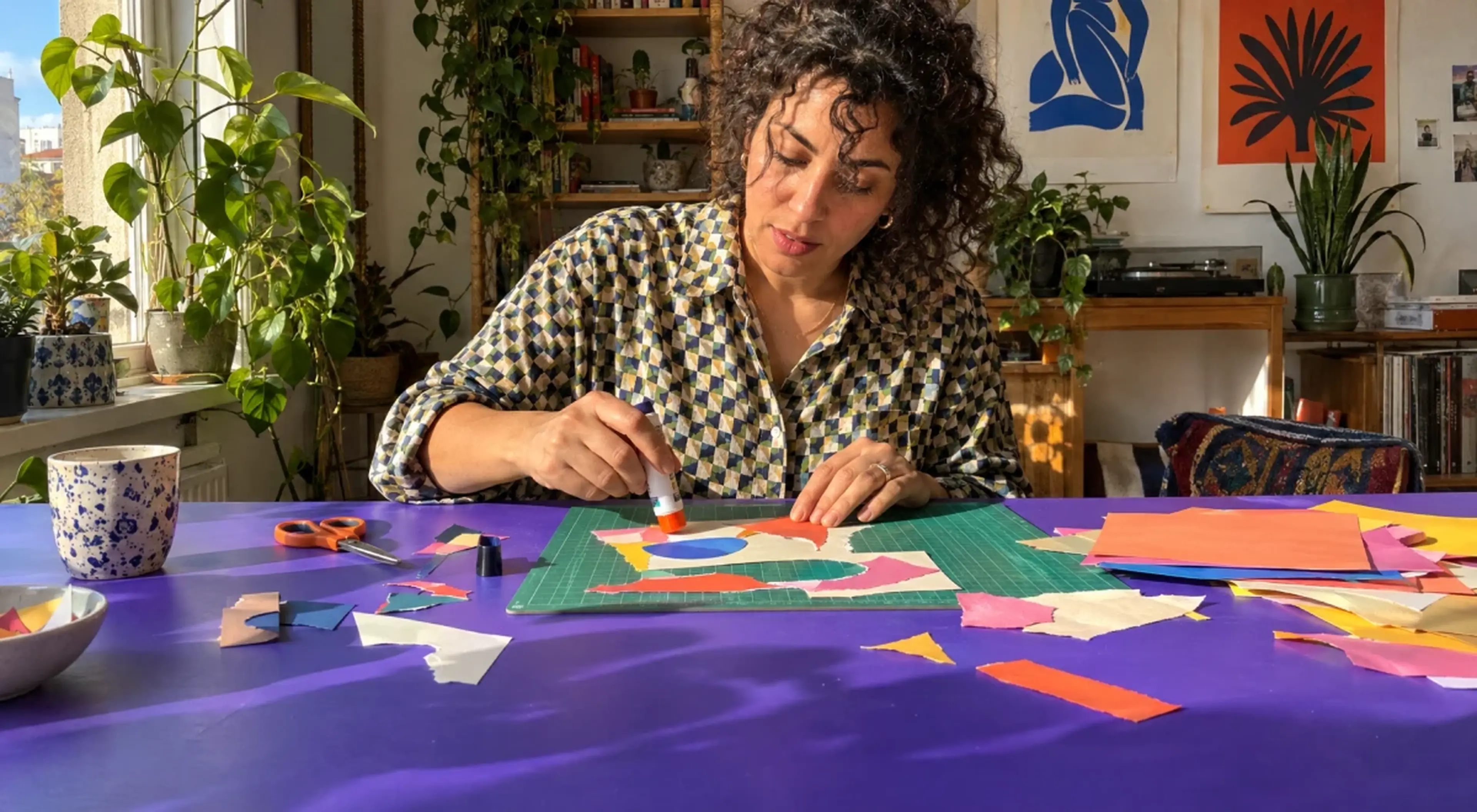
16. Collage and mixed media art
Collage combines cut paper, photographs, fabric scraps, and paint into a single layered composition, making it one of the most forgiving entry points into visual art. There's no correct technique, which removes the intimidation that stops many beginners from trying painting or drawing.
Old magazines, scissors, and glue are the only supplies required. This hobby works well for processing emotions or documenting a season of life, similar to art journaling but with a bigger, wall-worthy final product. Many hobbyists build an entire art form around a theme, like travel ticket stubs or old family photos.
🎨 Picking a new skill from this section? Nibble has quick Art lessons that pair well with any of them. Explore Nibble.
Performance, sound, and language-based hobbies
Creativity isn't only visual. These hobbies use voice, music, words, or new mental skills instead of a paintbrush.
17. Learning a musical instrument
Playing music is one of the most studied creative hobbies for brain health, and learning a new instrument enhances coordination and mental focus in ways few other activities match. Beginners don't need a full orchestra-grade setup; a secondhand keyboard, a ukulele, or free apps that simulate guitar chords are enough to start.
The early learning process is slow and sometimes frustrating, but even fifteen minutes a day builds muscle memory within a month. Many adults pick this back up specifically because it was abandoned in childhood, and the sense of returning to an old interest with fresh patience feels different the second time.
18. Creative writing
Creative writing covers short stories, poetry, personal essays, or even a serialized blog post shared with friends. It's one of the most accessible creative hobbies because the only basic tool required is something to write with; a notebook or a laptop both work.
Writing regularly builds self-expression and gives you a private space to process daily life without an audience watching. Many writers start with a simple prompt, three sentences about their morning, and let the habit grow from there. Over months, a stack of short pieces can turn into something worth sharing more widely.
19. Learning a new language
Learning a new language is a creative hobby in disguise, since fluency depends on playfully recombining words into fresh sentences every day.
Beyond the practical benefit of travel or connecting with family members who speak another language, learning a new language improves brain function and cognitive skills more broadly, which can improve mental health and overall well-being over time.
Free apps and online tutorials make starting cost nothing. Even ten minutes a day on vocabulary or listening practice builds momentum, quietly sharpening memory and focus in ways that show up in unrelated areas of daily life.
20. Playing chess
Playing chess is a centuries-old strategy game that rewards pattern recognition, patience, and creative problem-solving in equal measure. It fits neatly into free time because a single game can run anywhere from five minutes to an hour, depending on the format.
Online groups and apps make finding an opponent instant, day or night, without needing a physical board. Beginners can learn the rules in an afternoon, but the strategic depth keeps experienced players engaged for years. Chess also doubles as a social hobby, since local clubs and online communities are built entirely around shared matches and ongoing rivalries.
21. Crossword puzzles and word games
Crossword puzzles exercise vocabulary, memory, and lateral thinking in short, satisfying bursts that fit almost any stretch of free time. Unlike open-ended creative hobbies, puzzles offer a built-in sense of completion once the grid is filled in.
A daily newspaper puzzle or a free app is all that's needed to get started, and difficulty levels range from easy to challenging. Word games like this one ask for creative thinking, finding unexpected word associations, without requiring any physical supplies. A crossword often becomes someone's morning coffee ritual, a small mental warm-up before the day begins.
22. Online trivia games
Online trivia games turn general knowledge into a playful, competitive creative activity, testing recall across history, science, pop culture, and more. They work well in short sessions, making them ideal for a commute, a lunch break, or a few minutes before bed.
Many online groups host live trivia nights in a virtual world of their own, adding a social layer to what could otherwise be a solitary hobby.
Unlike puzzles with a single correct path, trivia rewards broad curiosity over deep specialization, which suits people who enjoy knowing a little about a lot. Building a personal trivia habit is also a low-pressure way to boost creativity through unexpected connections between facts.
🎨 Words, strategy, and sound all count as creative outlets too. Nibble mixes formats like these into every topic. See how Nibble works.

Worry beads calmed minds long before knitting did
Nibble explores the quiet rituals humans never outgrew
Food, beauty, and lifestyle hobbies worth trying
Some of the most satisfying creative hobbies happen in the kitchen, the bathroom mirror, or a video call with friends.
23. Baking
Baking turns flour, sugar, and butter into delicious baked goods, blending precision with genuine creative freedom once the basics are mastered. It's a fun hobby for people who like following a process through to a tangible, shareable result: bread, cookies, a layered cake for a birthday.
A basic oven and a handful of pans are the only tools most recipes require. Baking can generate income by selling baked goods at local markets or online, turning a weekend hobby into pocket money. Getting better at it rewards patience, since even failed batches teach something about timing and temperature.
24. Cooking classes and recipe experimentation
Cooking classes, whether in person or streamed online, teach techniques that turn routine meals into something expressive rather than a chore. Many platforms offer affordable virtual sessions, meaning a kitchen and an internet connection are the only real requirements, so you can practice techniques in your own home before ever signing up for an in-person studio class.
Beyond following recipes exactly, experienced home cooks start improvising, swapping spices or techniques to build their own dishes. For more hobbies at home you can start tonight, cooking has a strong social angle too, since shared meals bring family members and friends together more than most options here.
25. Makeup artistry and tutorials
Makeup artistry has grown into a serious creative hobby, with many people filming their own makeup videos to document techniques or finished looks. It combines color theory, blending skills, and a bit of performance, since recording yourself adds a layer of self-expression beyond the makeup itself.
Basic tools, a few brushes, and an affordable palette are enough to start experimenting at home. Online tutorials make advanced techniques like contouring or editorial looks approachable for beginners. Over time, many hobbyists build a small following simply by sharing their learning process, turning practice sessions into a modest creative project.
26. Video editing
Video editing takes raw footage, vacation clips, cooking videos, makeup tutorials, and shapes it into something polished and worth watching again. Free and low-cost editing software has lowered the barrier significantly, so a laptop and an internet connection are enough basic tools to begin.
This hobby pairs naturally with photography or makeup videos, giving you a second creative skill to layer on top of the first. The learning process involves trial and error with pacing, transitions, and sound, but even a short, well-cut video feels like a real creative achievement.
27. Soap making
Soap making blends basic chemistry with design, letting you choose scents, colors, and shapes to create a usable, giftable product. It shares a learning curve with candle making, measuring and mixing matter as much as creativity does, but the payoff is a bar of soap entirely your own design.
A melt-and-pour starter kit is the simplest way to begin without handling lye directly. Soap making can lead to starting a small business for hobbyists who scale up, selling at craft fairs or online. This hobby is a good fit for anyone who likes precise, repeatable processes with a tactile, sensory reward at the end.
28. Woodworking
Woodworking requires patience, focus, and hand-eye coordination, making it one of the more demanding but rewarding hobbies on this list. Beginners can start small, a cutting board, a simple shelf, using basic hand tools before investing in power equipment.
Progress is slower than most crafts here, but the satisfaction of building something sturdy and useful is hard to match.
Woodworking can lead to selling custom furniture for hobbyists who develop real skill over time, turning a garage hobby into meaningful income. Local community workshops or online tutorials are the easiest way to learn safely without a full home shop.
29. Knitting
Knitting is a popular hobby that promotes relaxation and creativity, using just two needles and a ball of yarn to build scarves, hats, or blankets row by row. The repetitive motion settles racing thoughts the way cross-stitch does, making it a reliable choice after a demanding evening.
A beginner can learn the basic knit stitch from a single online tutorial in under twenty minutes. Unlike some hobbies on this list, knitting is fully portable, fitting into a commute, a waiting room, or a quiet evening at home while catching up on a show.
🎨 That's the full list of 29. The same curiosity that pulled you this far fits right into a short Nibble session too. Get started with Nibble.
Why a creative hobby changes your evenings
A creative outlet is any regular activity that lets you shape a passing idea into something tangible, and that act matters for mental health more than it might seem. Creative hobbies give the brain a different kind of attention than scrolling does — active rather than passive — which brings more joy to an evening.
Stress relief shows up here through mechanism, not magic. Focused, repetitive tasks like stitching or sanding lower rumination, the looping, anxious replay of the day's worries, simply by occupying your hands and attention at once.
That shift connects to a bigger idea: building artistic skills and self-expression over time, not just filling free time. The endless scroll of a feed offers endless possibilities with no finish line, and in some of the creative ways listed above, a hobby offers something smaller and more finite instead: a stitched row, a dried coat of paint, a chord learned cleanly.
Picking up any fun hobby needs only basic tools, repetition, and a willingness to be bad at it for a week or two before it clicks. Your artistic side doesn't announce itself. It shows up after a few sessions of showing up anyway, as different techniques start to feel familiar instead of foreign.
🎨 Your hands do the work, your mind gets the quiet. Nibble fills the five minutes around it with something worth knowing. Explore Nibble.
How to pick your particular hobby without overthinking it
A hobby's cost and time needs often determine whether it lasts. Be honest about your free time, a few hours a week or a daily ten minutes, since a particular hobby that demands more than your schedule allows will stall fast.
Think about whether you want a solo or social hobby, and whether you're drawn to visual, verbal, or physical creativity. Trying two or three different hobbies in a single month is normal, not a failure. The goal is finding what's relaxing, not what looks productive on a shelf.
If you're still weighing options, a piece on matching your interests and hobbies walks through how to connect a hobby to what you already enjoy, based on the free time and energy you already have most evenings.
Here's how a handful of hobbies from the list stack up on cost, time, and income potential.
| Hobby | Starting cost | Time per session | Can become income |
|---|---|---|---|
| Diamond painting | Low | 30-60 min | Rarely |
| Jewelry making | Low-medium | 30-90 min | Yes, selling accessories |
| Photography | Medium | Varies | Yes, selling prints online |
| Baking | Low-medium | 1-3 hours | Yes, selling baked goods |
| Woodworking | Medium-high | 2+ hours | Yes, selling custom furniture |
| Soap making | Low-medium | 1-2 hours | Yes, small business potential |
Once you've picked something, the bigger challenge is usually sticking with it past the first few sessions, when the novelty wears off, and the new skill still feels clumsy. A read on what makes a good hobby stick digs into the habit side of things for exactly that stretch.
Starting tonight: The smallest possible first step
Pick one hobby from the list above and resist the urge to buy a full kit before you know if you like it. Here's a simple way to begin:
- Gather only the basic tools needed for a single session, not an entire supply closet.
- Set a timer for 20-30 minutes instead of planning a whole finished project.
- Look up one online group or community for that hobby, since motivation tends to dip once the first novelty wears off.
If none of the 29 ideas above quite clicked, a roundup of interesting hobbies worth exploring might turn up something closer to what you're after.
Starting small tonight, with whatever's already in a drawer or a cupboard, beats waiting for the perfect weekend that never quite arrives. A longer list of hobbies at home you can start tonight covers even more low-cost options if tonight's pick doesn't stick.
🎨 Picked something for tonight? Pair it with a quick Nibble lesson while the glue dries or the dough rests. Try Nibble.
Real people, real evenings with Nibble
Creative hobbies aren't the only way adults are reclaiming their evenings. Some are pairing craft time, or the quiet stretch right after it, with a short Nibble session instead of more scrolling.
Angela picked up painting as her creative outlet this year, and she pairs it with short Nibble lessons that keep surprising her with facts, a packed study schedule once skipped, a pairing she describes in Angela's user story.
Sarah Widmer keeps a rotation of craft projects going, and out of a stack of learning apps she tried alongside them, only Nibble stuck for the long haul, a reason she explains in Sarah's user story.
Shae used to reach for a phone the second a craft project wrapped up, and now reaches for a Nibble lesson instead, calling it the one thing on the calendar they're eager for, as told in Shae's user story.
Bea built a habit of opening Nibble at the same point each day, and the small, repeatable discipline it taught her spilled over into how she approaches other new skills, including hobbies she'd stalled out on before, as she explains in Bea's user story.
Make your next quiet evening count with Nibble!
Creative hobbies give your hands and mind a break from scrolling, something to shape, stitch, or season instead of something to swipe past. That shift alone, from passive feed to active making, is most of what this whole list has been about.
Nibble fills the gaps around whatever hobby you choose: the five minutes waiting for paint to dry, the walk to the store for more yarn, the wind-down after putting the sewing machine away.
Its personalized "For You" feed, daily streaks, and quick games turn those leftover minutes into curiosity rather than idle scrolling, with new lessons added every week.
Nibble has been downloaded by millions of users — 10M+ downloads and counting — from people looking for exactly this kind of in-between moment.
🎨 Pick a hobby from the list above for your hands tonight, and try Nibble for the minutes in between.

FAQs about creative hobbies
What is a creative hobby for beginners?
Beginners tend to succeed fastest with low-cost, low-skill entry points like making friendship bracelets, origami, or crossword puzzles. These hobbies require minimal basic tools, forgive mistakes easily, and deliver a finished result in one sitting. That quick sense of completion builds confidence before moving on to longer-term hobbies like sewing or woodworking, where the learning curve runs longer.
How do I find a new hobby that fits my personality?
Start by considering whether you prefer solo or social activities, and whether you think in images, words, or physical movement. Someone who enjoys quiet, solitary focus might lean toward watercolor painting or art journaling, while someone who wants company might prefer cooking classes or online trivia games. Matching the hobby to your actual free time each week matters just as much as matching it to your personality and energy level.
What are the mental health benefits of having a hobby?
A national APA poll found that adults with excellent or very good mental health are notably more likely to regularly make time for creative activities than those with fair or poor mental health, though this points to an association rather than proof of cause and effect. Mechanistically, focused, repetitive hobbies support stress relief by occupying attention that would otherwise loop on daily worries, which can improve overall mental well-being over time.
What is the easiest creative hobby to start at home?
Origami and crossword puzzles are among the easiest creative hobbies to start at home, since both need zero to minimal cost and no special skill. Origami only requires paper, while a crossword puzzle needs just a pen or a free app. Both can be picked up in a spare five minutes without any shopping trip, special lighting, or setup required beforehand.
What crafty hobbies can you do with basic tools?
Several crafty hobbies need only a small, inexpensive tool set: cross-stitch calls for a needle, embroidery floss, and aida cloth; candle making needs wax, a wick, and a container; jewelry making requires pliers and a small bead collection. All three can be started with a beginner kit costing under twenty dollars, with online tutorials covering the basic techniques for each one.
What creative hobbies can make you money?
Several hobbies on this list carry real income potential once skills develop. Woodworking can lead to selling custom furniture, jewelry making allows for selling unique accessories, photography can be monetized through selling prints online, baking can generate income by selling baked goods, and soap making can lead to starting a small business from a kitchen counter.
What hobby makes you creative?
Almost any hands-on, repeatable activity counts, from painting and baking to jewelry making and creative writing. Creativity lives in the process of making decisions and solving small problems along the way, not in the specific medium you choose. A hobby that asks you to shape, arrange, or build something will strengthen creative thinking over months of regular practice.
What are good creative hobbies for adults?
Good creative hobbies for adults range widely, from woodworking and pottery to digital illustration and playing chess, depending on how much free time and budget you have. The best fit usually matches your actual schedule rather than an idealized version of it. Starting with a low-cost option like origami or cross-stitch helps you test the waters before committing to pricier supplies and equipment.
Published: Oct 27, 2026

 128K+ ratings worldwide
Keep your curiosity sparked with Nibble
Join 10M+ people and discover bite-sized ideas across 35+ topics with an all-around knowledge app
