
Is Everyone Related to Genghis Khan? What Your DNA Might Say
One 13th-century ruler and one surprisingly common Y-chromosome lineage. See what the genetic legacy adds up to.
Last updated: Oct 27, 2026
Read time: 7 min

By Nibble Team
Nibble's Editorial Team
Our editorial team loves exploring how things work and why. We’re guided by the idea that people stay curious throughout their lives — they just need engaging stories and ideas to reignite that curiosity.
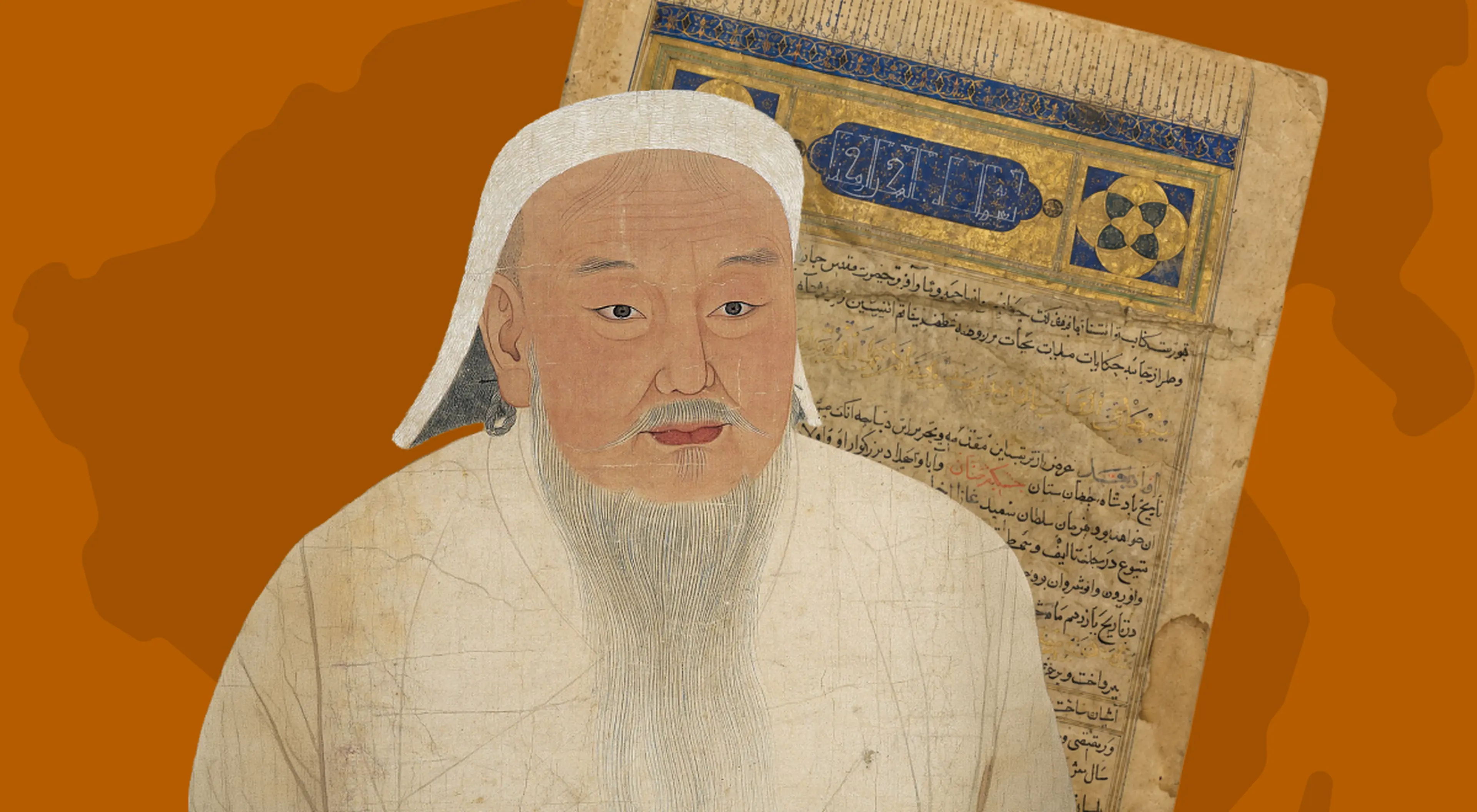
Is everyone related to Genghis Khan, or is the viral "16 million descendants" claim exaggerated? You've probably seen that number online.
A 2003 genetic study published in the American Journal of Human Genetics found a Y-chromosome lineage across Central Asia that researchers linked to the time of Genghis Khan. Its distribution followed much of the former Mongol Empire, but the evidence doesn't prove that every carrier descended directly from the famous ruler.
A question like this is worth following without a weekend research spiral. The Nibble app is built for exactly that kind of curiosity, breaking history and science into quick, gamified lessons.
Try the Nibble app to keep following curiosity-driven stories like this one.
Quick summary: Is everyone related to Genghis Khan?
The short version comes first, before the full breakdown.
- The claim that 16 million men share a paternal lineage linked to Genghis Khan's era comes from a real genetic study, but direct descent from him hasn't been proven.
- The Y-chromosome marker haplogroup C-M217 appears in populations across Central Asia, including Mongolia and Kazakhstan.
- Researchers estimated that the lineage could be shared by millions of men, but this doesn't tell us how many people worldwide are related to Genghis Khan.
- The original study's attribution has been questioned by later research, including findings from ancient DNA.
- A DNA match can reveal a shared paternal lineage, not confirm that Genghis Khan was your direct ancestor.
Keep reading to see exactly where that number comes from and how solid it holds up.
What the Genghis Khan DNA claim really means
The claim that everyone is related to Genghis Khan isn't a myth invented for clicks. It's a simplified version of a real genetics paper, and that simplification is where it gets misleading. It's part of a bigger question researchers keep asking: how closely we're all related to each other in the first place.
A Y-chromosome lineage is a set of genetic markers passed almost unchanged from father to son. Because it barely changes, scientists use it to trace one male line back centuries.
A full family tree mixes in every ancestor on both sides. A Y-chromosome lineage follows one branch only, father to son to son, all the way down.
🧠 A Y-chromosome lineage follows one branch of the family tree, father to son, for generations. The Nibble app turns small facts like this into daily learning moments.
The study that started the Genghis Khan DNA debate
The original research came together in a few key steps.
What researchers sampled
Geneticist Tatiana Zerjal and Chris Tyler-Smith led the paper, titled "The Genetic Legacy of the Mongols," and published in the American Journal of Human Genetics. The team sampled Y-chromosomes from over 2,000 men across 16 populations stretching from Mongolia to Uzbekistan.
What they found
They spotted a tight cluster of closely related Y-chromosomes, nicknamed a star cluster, repeating across the region. Genetic dating put its age at roughly 1,000 years, matching the era of Temüjin, later known as Genghis Khan.
This finding helps explain why so many people ask how many people have Genghis Khan DNA. The researchers estimated that around 8% of men across the sampled region carried the lineage, which led to the widely repeated figure of roughly 16 million men.
However, carrying the same Y-chromosome lineage doesn't establish a documented family connection to Genghis Khan himself.
Why they linked it to Genghis Khan
The lineage's spread matched the Mongol Empire's old borders, a pattern that's hard to explain by chance. Genghis Khan had numerous wives and concubines beyond his principal wife, Börte, along with several sons.
One son, Jochi, founded a ruling line that became the Golden Horde. Sons and grandsons inheriting power across generations could easily spread one lineage across a continent.
A 2015 study in the European Journal of Human Genetics found a similar pattern among descendants of Giocangga, an ancestor of the Qing dynasty rulers, suggesting this kind of dynastic spread isn't unique to Genghis Khan.
🧠 Genghis Khan's son Jochi founded the ruling line that became the Golden Horde. The Nibble app has more short lessons on empires like this one.
How scientists trace a Y-chromosome lineage across centuries
Not all DNA tests measure ancestry the same way.
Y-chromosome DNA passes from father to son only, making it the tool for tracing a direct male line. Mitochondrial DNA passes from mother to all her children but stops there, tracing only the maternal side.
Autosomal DNA mixes both parents' genomes each generation. It works well for close relatives, but accuracy drops quickly further back in time.
That same paternal thread is also why surnames, and even middle names, often follow one side of a family more closely than the other.
| DNA type | Inherited from | Best for tracing | Limitation |
|---|---|---|---|
| Y-chromosome (Y-DNA) | Father to son only | Direct male-line ancestry, surnames, historical figures like Genghis Khan | Only works for people with a Y chromosome |
| Mitochondrial DNA (mtDNA) | Mother to all children | Direct maternal-line ancestry | Doesn't reflect paternal ancestors |
| Autosomal DNA | Both parents, mixed each generation | Recent ancestry (a few generations back), relative matching | Loses accuracy fast the further back you go |
Y-DNA works for tracing a single figure like this because its mutations happen slowly and predictably. That lets scientists estimate how long ago two men shared a common ancestor.
Where the Genghis Khan Y-chromosome lineage shows up today
The highest rates appear in Mongolia, Kazakhstan, and among groups like the Hazara in Pakistan, tapering off outside the Mongol Empire's old boundaries.
Questions about Genghis Khan's descendants today often focus on Mongolia and China, but the genetic evidence needs careful interpretation. The lineage is found across several Central Asian populations, and its presence in a group doesn't mean every member of that group shares the same ancestry. The available findings also don't establish what percentage of China's population is related to Genghis Khan.
A separate study of the Kerey clan in Kazakhstan found the same signature at unusually high rates. Central Asia overall shows the clearest concentration, matching the territory Mongol rulers controlled most directly.
🧠 The Kerey clan in Kazakhstan carries this lineage at unusually high rates. The Nibble app covers regional history like this across its lessons.
Why the Genghis Khan DNA link is still debated
Not every detail of the original study has held up over time.
What's confirmed
The Y-chromosome lineage exists; it's unusually common across Central Asia, and its age and spread line up with the Mongol Empire's history.
What's disputed
A 2010 task force from the American Society of Human Genetics noted that Y-DNA-only studies carry real statistical limits for naming one source.
A 2016 analysis of ancient DNA from elite graves dated to Genghis Khan's era found a different haplogroup, complicating the direct attribution. Genghis Khan's own burial site has never been found, so researchers can't test his remains directly and instead rely on graves from people who lived in his era.
None of this rules out a connection to Genghis Khan. It just means the evidence is messier than the viral number suggests.
Could you be related to Genghis Khan? How to check your DNA
A home DNA analysis can tell you part of the story, but genealogy research fills in the gaps a lab result alone can't.
Steps to check your haplogroup
- Order a Y-DNA test that reports haplogroups instead of general ethnicity estimates alone.
- Submit a sample and wait for your lab results.
- Check your report for haplogroup C-M217 or its sub-branches.
- Compare your results against regional carrier rates before drawing conclusions.
If you're wondering, “Am I related to Genghis Khan?” or “Could I be related to Genghis Khan?”, keep in mind that a haplogroup result is only one clue. To investigate your Genghis Khan family tree, combine DNA findings with genealogical records where possible. A shared haplogroup can point to a distant common paternal ancestor, but it can't identify that person as Genghis Khan without stronger evidence.
What a match does and doesn't prove
Sharing the haplogroup confirms membership in a large lineage, not direct descent from one person. It's no more proof of a link to Genghis Khan than a shared surname is proof of a link to everyone else who has it. Surnames spread the same way, and one surname is shared by hundreds of millions of people worldwide.
It also doesn't mean you're descended from Genghis Khan in any way a genealogist could document.

Don't let a busy schedule waste your curiosity
Reignite it with Nibble
Three questions to test what you know about your own family tree
These questions don't need a lab result to be worth thinking about, and they're a good starting point for anyone curious about family trees in general. A cousin chart can help you figure out exactly how removed a shared ancestor really is.
- What do you know about your paternal line past your grandfather?
- Would a DNA test change how you see your own family history?
- Which historical empire or dynasty would you want to explore next?
🧠 A single question about your family tree can lead to a much longer research trail. The Nibble app keeps that kind of curiosity going, one lesson at a time.
Keep following the Genghis Khan story with the Nibble app
So, is everyone related to Genghis Khan? Not even close, but the real answer is stranger than the myth: a specific Y-chromosome lineage spread across Central Asia in a way that still puzzles geneticists and adds a strange chapter to genetic history.
The Nibble app builds a personalized feed around whatever you're curious about, mixes in quizzes and games to help you remember what you read, and fits into small gaps in your day, like a commute or a coffee break.
The next subject might be genetics, the Mongol Empire, or something else entirely. Either way, the app keeps general knowledge light instead of making it feel like homework.
Download the Nibble app and follow your own next thread of curiosity.

FAQs about Genghis Khan's lineage
Can I find out if I'm related to Genghis Khan?
A Y-DNA test can tell you if you carry haplogroup C-M217, the marker linked to Genghis Khan's era. That result places you in a lineage shared by millions of men, though it won't confirm direct descent from him specifically. Most genealogists treat a match like this as context, not proof of one exact ancestor.
Should I trust the claim that 16 million men descend from Genghis Khan?
The number holds up as a reasonable estimate built from real data, so you can trust it more than most viral stats. Researchers reached it by combining an 8% carrier rate with regional population figures. Just remember it only counts male-line descendants, since Y-DNA testing can't trace ancestry through daughters or granddaughters.
What does it mean if I share Genghis Khan's Y-chromosome lineage?
Your paternal lineage would carry a genetic marker, haplogroup C-M217, that's unusually common across Central Asia and dates back roughly a thousand years. That doesn't mean you're personally traceable to Genghis Khan himself. It means you share a lineage with millions of other men, not a direct connection to one person.
Why do scientists still debate this theory?
Real disagreement exists here because Y-DNA-only studies carry statistical limits when it comes to naming one specific source. You'll find that ancient DNA from Mongolian-era graves has also revealed a different haplogroup than the one in the 2003 paper. The lineage's existence isn't in question, but its exact source still is.
Can I trace my family tree without taking a DNA test?
Paper records can take you far. Birth, marriage, and death certificates, plus family interviews, often cover several generations before a DNA test becomes necessary. Genealogical archives and historical records fill gaps that testing alone can't reach. A DNA test adds another layer, but it works best alongside that research, not instead of it.
Is it true that Genghis Khan is related to everyone?
No. The genetic study doesn't show that everyone alive today is related to Genghis Khan. It identified a Y-chromosome lineage that is unusually common in parts of Central Asia. Even when people share a lineage, that doesn't prove direct descent from one specific historical person.
What percentage of the world has Genghis Khan DNA?
The widely cited estimate of around 16 million men came from research into a Y-chromosome lineage found across Central Asia. It isn't a verified percentage of the entire world's population, and the lineage hasn't been conclusively linked to Genghis Khan himself. The original findings should be treated as an estimate, not a global DNA census.
Are all Mongolians related to Genghis Khan?
No. The presence of a Y-chromosome lineage in Mongolia doesn't mean every Mongolian carries it or descends directly from Genghis Khan. People inherit DNA through many branches of their family trees, while Y-DNA traces only one direct paternal line.
Was Genghis Khan white and from Sweden?
There is no credible historical basis for the claim that Genghis Khan was from Sweden. He was a Mongol ruler who rose to power on the Mongolian steppe in the early 13th century. The term “white” is a modern racial label that doesn't neatly describe the identities and ancestry of medieval Central Asian peoples.
Published: Aug 7, 2026

 128K+ ratings worldwide
Keep your curiosity sparked with Nibble
Join 10M+ people and discover bite-sized ideas across 35+ topics with an all-around knowledge app
